Why Are Consumers Rejecting “Industrial Seed Oils”?
A quiet revolution is happening in the grocery aisle. Consumers are checking ingredient lists closer than ever, specifically hunting for, and avoiding, industrial seed oils.
Known in health circles as the “Hateful Eight,” these oils face intense scrutiny due to heavy processing methods (like bleaching and deodorizing) and potential links to inflammation.
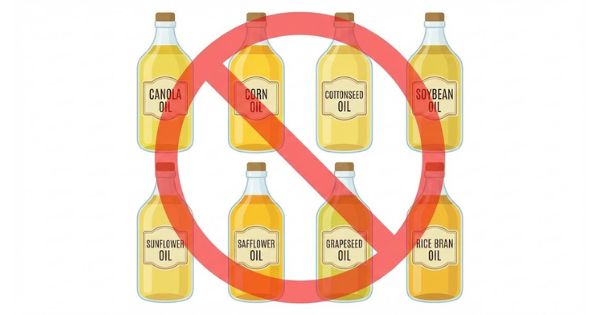
According to the Seed Oil Free Alliance, the list of oils consumers are actively avoiding includes:
- Canola
- Corn
- Cottonseed
- Soy
- Sunflower
- Safflower
- Grapeseed
- Rice Bran
For food and personal care brands, the comparison of Sustainable Palm Oil vs. Seed Oils is no longer just a supply chain detail. It is a defining factor in brand loyalty and market positioning.
The “Fruit Oil” Difference: What Brands Need to Know
Product developers often face a dilemma: alternatives like avocado and olive oil carry a “health halo” but come with high costs and supply volatility. You need a scalable solution that cleans up the label without breaking the unit economics.
This is where the narrative changes. Palm oil is not a seed oil; it is a fruit oil.
Definition: Palm Oil vs. Seed Oils
Sustainable Palm Oil is a non-GMO fruit oil pressed from the fleshy mesocarp of the oil palm fruit (Elaeis guineensis), using a process similar to olive oil and avocado oil. Unlike industrial seed oils, it does not require hexane extraction.
Leading this charge is DAABON. We are top ranked worldwide in transparency in the palm oil sector on SPOTT, a ZLS Conservation Initiative. With innovations like American Palm Oil (AMPO), DAABON provides a path to clean labels that meet the strict criteria of the Seed Oil Free Certified standard.
Is Palm Oil a Seed Oil? (The Biological Difference)
Mesocarp vs. Kernel: The “Olive Oil” of the Tropics
To understand why palm oil belongs in a clean label formulation, you must first look at its botany.
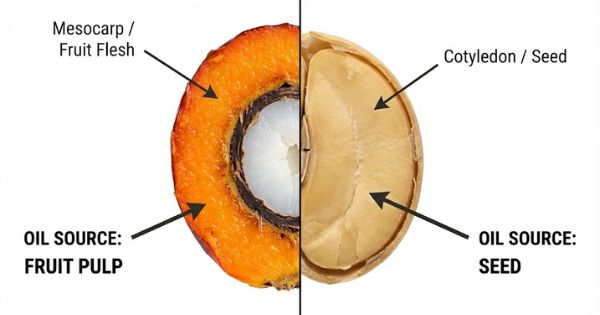
Biological diagram comparing the fleshy orange mesocarp of an oil palm fruit against a dry soybean seed. This illustrates why palm oil is classified as a fruit oil similar to olive oil, while soy is an industrial seed oil.
Biologically, it is extracted from the fleshy mesocarp of the oil palm fruit, placing it in the same category as olive oil and avocado oil. Unlike industrial seed oils which are chemically extracted from hard seeds like corn kernels or soy beans, palm oil is a natural fruit fat.
Minimal Processing: A Hexane-Free Solution
This biological difference allows for a gentler extraction process. DAABON’s Organic Palm Oil is physically refined without the use of hexane. Instead, we use a mechanical pressing process followed by purification using simple, natural aids like citric acid and bleaching earth clays.
This ensures the final ingredient remains true to its source, avoiding the “ultra-processed” label that 68% of consumers are now actively avoiding.
Functional Superiority: A Direct 1:1 Replacement
For food manufacturers, the physical properties of an oil are just as important as its origin. Palm oil offers the best of both worlds: the “clean” profile of a fruit oil with the functionality of a shortening.
- Natural Stability (No Hydrogenation): Palm oil is naturally semi-solid at room temperature. It provides the necessary structure for cookies and crackers without creating trans fats or resorting to interesterified fats.
- Resistance to Oxidation: Unlike seed oils which are high in unstable PUFAs, palm oil’s balanced fatty acid profile extends shelf life organically.
- High-Heat Performance: It functions as a direct replacement for frying oils in chips and snacks, maintaining stability at high temperatures where olive oil would burn.
Why Avocado & Olive Oil Can’t Replace Seed Oils at Scale
When brands decide to remove industrial seed oils, the initial impulse is often to switch to popular “wellness” oils. While these ingredients have excellent consumer perception, they present significant challenges for mass-market manufacturing.
The Scalability Gap:
- Supply Chain Volatility: Niche fruit oil supplies are often fragmented and subject to extreme price spikes.
- Yield Inefficiency: They simply cannot produce the volume needed for global food production.
The “Yield” Advantage: Why Palm Wins
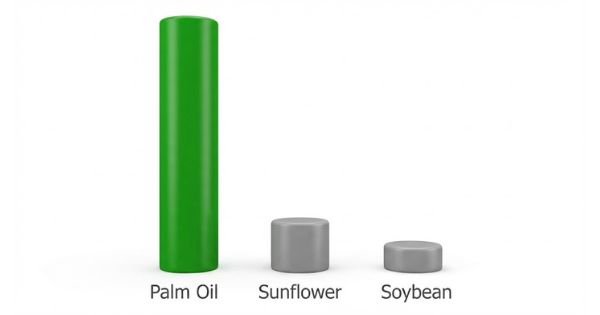
Bar chart comparing agricultural oil yield per hectare. The Palm Oil bar is significantly taller (representing ~3.8 tonnes/ha) compared to the short bars for Sunflower and Soybean oil, illustrating that palm oil requires far less land to produce the same volume.
Sustainable palm oil is the only ingredient that offers the scalability of a seed oil with the clean-label profile of a fruit oil. This is largely due to crop efficiency.
Data Snippet: Oil Yield per Hectare
Oil palm is the most efficient oil crop on the planet. To produce 1 tonne of oil, palm requires significantly less land than any alternative:
- Palm Oil: ~0.26 hectares
- Sunflower Oil: ~1.43 hectares
- Soybean Oil: ~2.00 hectares
Source: SPOTT.org Transparency Data
Because of this efficiency, DAABON eliminates the trade-off between ethics and volume, providing the consistent tonnage major food brands require.
The Regenerative Solution: Beyond “Sustainability”
Brands today do not have to choose between functional ingredients and their values; they simply need to choose the right partner.
DAABON has moved beyond simple sustainability to true regeneration. We are proving that palm oil production can heal the planet rather than harm it through three pillars of stewardship:
1. First in the World: Regenerative Organic Certified Gold® (ROC Gold)
DAABON was the first palm oil company to be Regenerative Organic Certified Gold® (ROC Gold) certification. This goes beyond organic, verifying rigorous standards for soil health, animal welfare, and farmworker fairness.
2. Verified Carbon Neutral: A Scope 3 Solution
For food and personal care brands, sustainability is no longer just a “nice to have”, it is a regulatory requirement. With the EU Deforestation Regulation (EUDR) and strict Scope 3 reporting rules coming into effect, brands cannot afford greenwashing.
DAABON Produces Verified Carbon Netural Palm Oil
Unlike “Carbon Positive” models that add emissions, DAABON’s operations balance carbon output with equivalent carbon removal. This is verified through a rigorous Life Cycle Assessment (LCA) following ISO 14067 standards, tracking impact across Scope 1 (Farming), Scope 2 (Energy), and Scope 3 (Supply Chain).
How We Achieve Balance:
- Carbon Sinks: Regenerative practices like minimal tillage and organic composting enrich the soil, turning our farms into active carbon capture zones.
- Closed-Loop Energy: We utilize biodigesters to capture methane from organic waste and convert it into clean electricity, powering our mills without fossil fuels.
- Verified Transparency: This commitment to data-backed accountability is why DAABON is top ranked worldwide in transparency in the palm oil sector on SPOTT, a ZLS Conservation Initiative.
By sourcing from DAABON, you aren’t just buying an ingredient; you are actively lowering your brand’s Scope 3 emissions.
3. Zero Waste Circular Economy
We operate a circular system where nothing goes to waste. Organic byproducts become compost to feed the soil, and biomass is used to generate the clean energy that powers our mills.
The Competitive Edge: Seed Oil Free Certification
First of its Kind: A New Standard
In a market crowded with generic “natural” claims, third-party validation is the only currency that matters.
DAABON has set a new global benchmark by becoming the first palm oil producer in the world to earn the Seed Oil Free Certification (SOFC). This milestone confirms that our supply chain is strictly audited and guaranteed free from contamination by the “Hateful Eight” industrial oils.
Marketing Leverage: Turn Ingredients into Assets
When you formulate with DAABON’s certified palm oil, you streamline the path to applying for the SOFC label on your own packaging.
Why this seal matters on the shelf:
- Instant Trust: Shoppers immediately identify your product as a “clean” choice.
- Premium Positioning: Validates your product is free from inflammatory industrial oils.
- Transparency: Proof that your supply chain is verified, not just “self-declared.”
Conclusion: The “Fruit Oil” Verdict
The debate of Sustainable Palm Oil vs. Seed Oils ultimately reveals a clear winner for the modern conscious brand.
Sustainable palm oil products offer the “Holy Grail” triad that R&D and procurement teams have been searching for:
| Feature | Industrial Seed Oils | Daabon Organic Palm Oil |
|---|---|---|
| Source | Extracted from seeds Corn, Soy, Canola |
Pressed from Fruit Palm mesocarp (not seeds) |
| Processing | Chemical extraction Uses hexane solvents |
Mechanical pressing Hexane-free |
| Stability | Highly unstable Often requires hydrogenation |
Naturally stable High smoke point |
| Ethics | Linked to GMO monocultures High land & chemical input |
Regenerative Organic Certified® Soil, people, planet focused |
Ready to Transform Your Label?
The era of compromising between profitability and clean ingredients is over. Switch to the ingredient that offers transparency, performance, and peace of mind.
- Contact DAABON USA today to request a consultation.