Is palm kernel oil a seed oil? It comes from a seed, but it isn’t classed as a seed oil. It’s extracted from the kernel inside the oil palm fruit (Elaeis guineensis), yet Seed Oil Free Certified classes it as an allowed tropical fat with only about 2% omega-6, closer to coconut oil than to canola or soy.
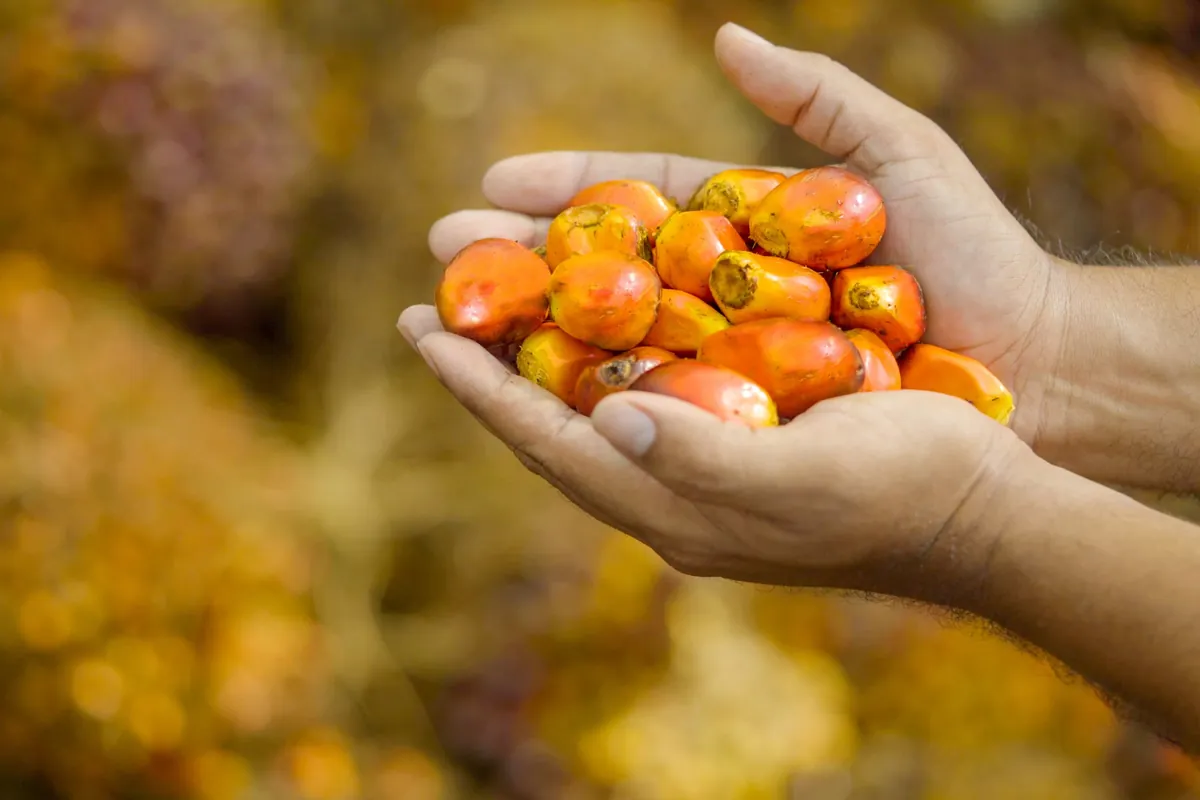
A snack bar that says “seed oil free” on the front and lists palm kernel oil on the back is going to confuse some shoppers, because a kernel sounds a lot like a seed. They want to know whether palm kernel oil is considered a seed oil and whether the label is honest, and if you buy fats for food or personal care products, that question eventually reaches you.
The answer depends on where the oil comes from and on what makes an oil a “seed oil” in the first place. This guide covers both, then explains how palm kernel oil differs from palm fruit oil, what it’s used for, and how to handle it on a seed-oil-free label.
Is Palm Kernel Oil a Seed Oil? It Depends on the Definition
Where the kernel sits in the palm fruit
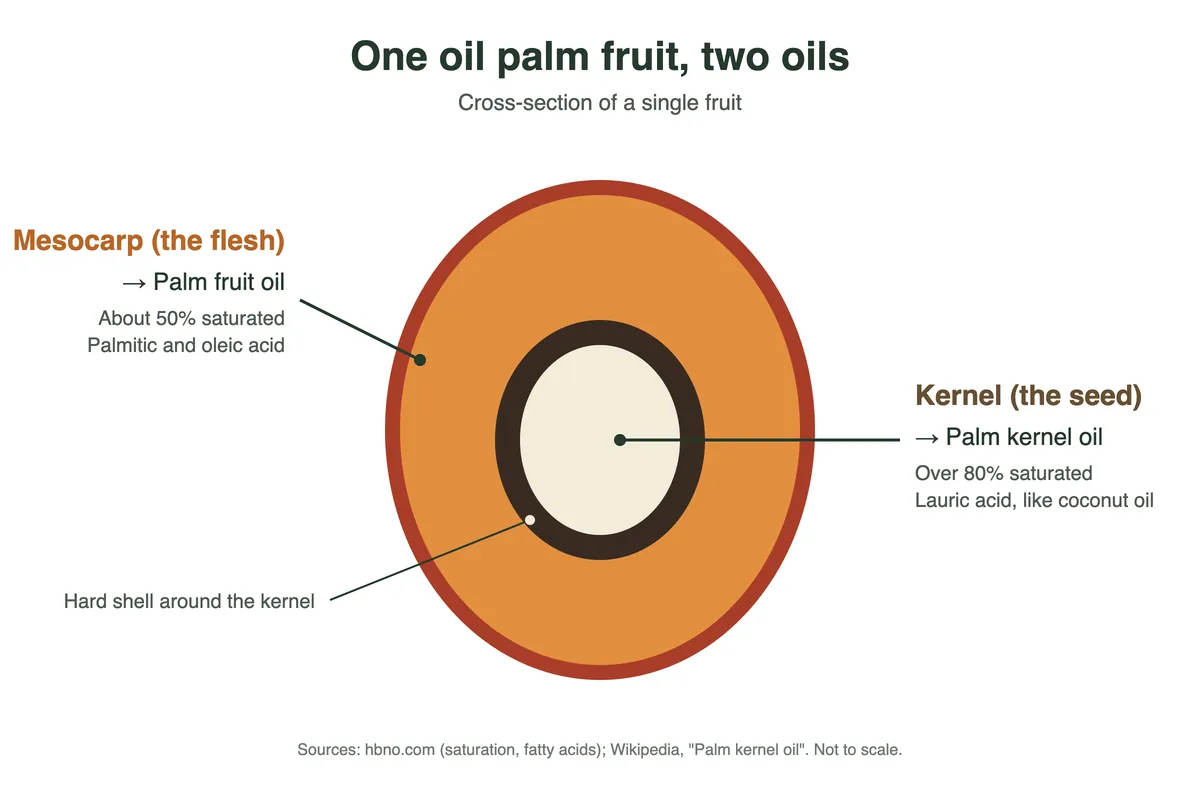
Each oil palm fruit gives two different oils. Palm fruit oil is extracted from the soft, fleshy layer around the seed, called the mesocarp, while palm kernel oil comes from the kernel at the center of the fruit.
If “seed oil” simply meant “oil from a seed,” palm kernel oil would qualify and palm fruit oil would not, since palm fruit oil comes from the flesh.
Why the sources disagree
Seed Oil Scout calls palm kernel oil “technically a seed oil” because it comes from the kernel, but Seed Oil Free Certified says it isn’t one and allows it in certified products. Neither is wrong, since Seed Oil Scout is describing where the oil comes from and the certifier is judging it by its fatty acids, which are what the seed-oil debate is really about.
What makes an oil a “seed oil”?
When people worry about seed oils, they mean oils such as canola, soybean, corn and sunflower, which are rich in linoleic acid (an omega-6 fat) and prone to oxidation. As certifiers use the term, a seed oil is defined by its fatty acids rather than by the part of the plant it comes from.
On that measure, palm kernel oil looks nothing like canola or soy. Seed Oil Free Certified puts it at about 2% omega-6, against roughly 40–60% for industrial seed oils. It’s also more than 80% saturated, and the certifier notes that, like coconut oil, it stays solid at room temperature. That’s why certifiers class it as a tropical fat rather than a seed oil.
Palm Kernel Oil vs Palm Oil: Two Oils From One Fruit
Both oils come from the same fruit, but they behave very differently in a formula.
| Property | Palm fruit oil | Palm kernel oil |
|---|---|---|
| Part of the fruit | Mesocarp (the flesh) | Kernel (the seed) |
| Saturated fat | About 50% | Over 80% |
| Main fatty acids | Palmitic (40–48%) and oleic (36–44%) | Lauric (45–52%) and myristic |
| Polyunsaturated fat (mostly omega-6) | About 9% | About 2% |
| At room temperature | Semi-solid | Solid to semi-solid |
| Oil type | Palmitic-oleic | Lauric, like coconut oil |
Palm fruit oil is rich in palmitic and oleic acid, which gives it the higher melt point and stability that margarines and shortenings need. Palm kernel oil is a lauric oil, like coconut oil, so it’s firm at room temperature and melts much like cocoa butter.
Neither oil is better across the board, so the choice comes down to the melt and texture your product needs.
What are palm kernel olein and palm kernel stearin?
Palm kernel oil can be separated into a harder fraction, called stearin, and a softer one, called olein. This matters because whole palm kernel oil melts too low for some uses, and a food-science reference on ScienceDirect notes that fractionating it directly gives a better, more expensive product than hydrogenating it.
Palm kernel stearin contracts well as it sets, which suits molded chocolate, while the olein is the softer, lower-value fraction that often goes into margarine blends.
What Palm Kernel Oil Is Used For
Because of how it melts and sets, palm kernel oil is used mainly in two areas: food and soap.
How is palm kernel oil used in food?
In food, palm kernel oil goes into confectionery fats, margarines and spreads, as well as coffee creamers and cheese analogs. That’s mostly because it melts much like cocoa butter, which suits confectionery, and the stearin fraction sets firmly enough for molded chocolate.
Why soap and cosmetics makers use it
Lauric acid is what makes palm kernel oil useful for soap. As hbno.com puts it, it gives the hard, fast-lathering bars that soap makers usually get from coconut oil, and it’s also a preferred feedstock for surfactants. In cosmetics, its hardness helps products that need to hold their shape, such as lip balms and deodorants.
Which palm kernel oil grade fits your product?
Each grade behaves differently, so name the one you need when you order.
| Grade | What it is | Typical uses |
|---|---|---|
| RBD palm kernel oil | The whole oil, refined, bleached and deodorized | Soaps, creamers, spreads |
| Palm kernel stearin | The harder fraction | Molded chocolate, confectionery fats |
| Palm kernel olein | The softer fraction | Margarine blends |
Using Palm Kernel Oil in a Seed-Oil-Free Product
Certification allows palm kernel oil
If you make a seed-oil-free claim, you can still use palm kernel oil, because the Seed Oil Free Certified standard lists it as an allowed fat. Certification still involves an ingredient review, ongoing supply-chain audits and lab testing of the oils and fats you add.
Frequently Asked Questions
What is palm kernel oil?
Palm kernel oil is an edible plant oil extracted from the kernel, the seed at the center of the oil palm fruit. It is a lauric oil, more than 80% saturated, used in confectionery fats, creamers, soap and cosmetics.
Is palm kernel oil the same as palm oil?
No. Both come from the oil palm fruit, but from different parts. Palm oil is extracted from the fleshy mesocarp and is rich in palmitic and oleic acid. Palm kernel oil comes from the seed and is mostly lauric acid.
Is palm kernel oil allowed in Seed Oil Free Certified products?
Yes. The Seed Oil Free Certified standard treats palm kernel oil as an allowed tropical fat. It contains about 2% omega-6, far below the roughly 40–60% found in industrial seed oils.
Is palm kernel oil the same as coconut oil?
No, but the two are close. Palm kernel oil’s fatty-acid profile is almost identical to coconut oil’s: high in lauric acid and more than 80% saturated. Like coconut oil, it is firm at room temperature and makes hard, fast-lathering soap.
Should You Use Palm Kernel Oil?
Palm kernel oil comes from a seed, but its low omega-6 and lauric profile put it much closer to coconut oil than to canola or soy, and the seed-oil-free standard allows it. What matters more for your product is how it performs, which comes down to whether its melt suits the application, which grade fits, and how you’ll explain it to shoppers.
DAABON supplies RBD palm kernel oil, palm kernel olein and palm kernel stearin, along with palm-derived soap base and soap bars. If you are weighing a grade, ask DAABON for a specification or a sample.