Why B2B Manufacturers Must Transition to Sustainable Palm Oil
The landscape of industrial food production is shifting. Stringent regulations like the EU Deforestation Regulation (EUDR) demand absolute supply chain transparency. This guide, backed by DAABON, provides procurement leaders with a definitive roadmap to confidently source ethical, premium ingredients without compromising on quality or scale.
TL;DR:
- The Risk of the Status Quo: Conventional palm oil exposes B2B manufacturers to severe environmental, reputational, and regulatory risks, including strict new traceability mandates like the EUDR.
- The Definition of Excellence: High-quality organic palm oil is a versatile, sustainable ingredient cultivated without synthetic pesticides or fertilizers, maintaining the exact functional stability required for industrial formulations.
- The Sourcing Gold Standard: Manufacturers must demand RSPO Identity Preserved (IP) models alongside USDA Organic and Regenerative Organic Certified® (ROC™) Gold standards. DAABON is one of the few producers globally to offer this at scale.
1. Why High-Quality Organic Palm Oil is a Strategic Imperative
Why Are B2B Brands Moving Away from Conventional Palm Oil?
The environmental and social costs of conventional palm oil are no longer acceptable risks for modern B2B brands. Historically, the rapid expansion of conventional palm oil has driven severe deforestation and biodiversity loss, particularly in Southeast Asia. It has also exposed companies to devastating reputational damage tied to poor labor practices and land disputes. Today’s consumers and stakeholders simply demand better.
Transitioning your sourcing strategy is a powerful way to mitigate these deep-seated supply chain vulnerabilities. Moving away from conventional sources actively future-proofs your operations against tightening global legislation. For example, strict mandates like the EU Deforestation Regulation (EUDR) require total supply chain visibility down to the exact plot of land. By committing to responsible palm oil production, and partnering with fully traceable suppliers like DAABON, you protect your brand’s reputation and ensure uninterrupted market access.
Does Organic Palm Oil Maintain Performance and Quality?
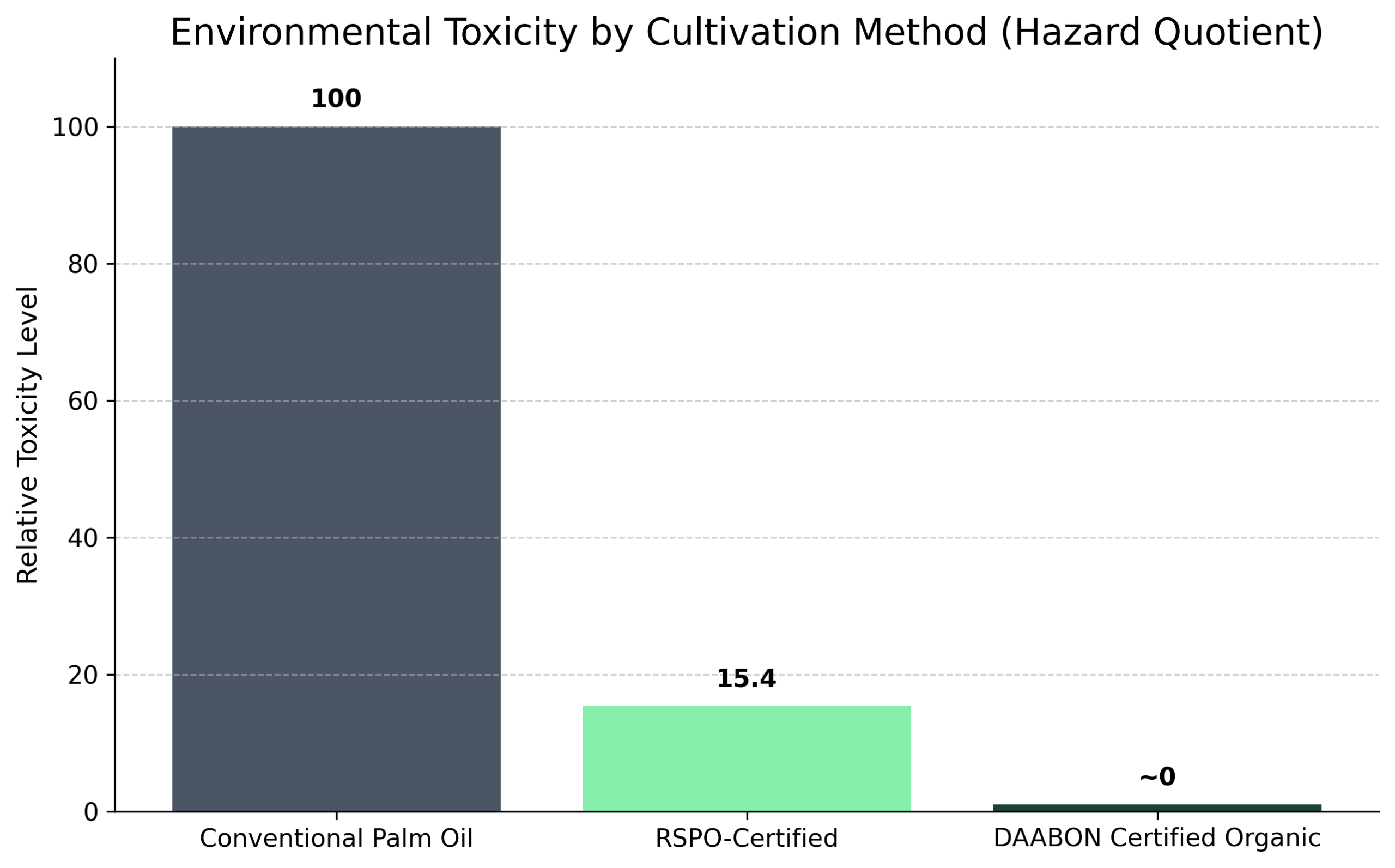
Data source: Journal of Cleaner Production smallholder study (2025).
Ethical sourcing is not just a moral choice; it is a commitment to superior product integrity. Cultivating high-quality organic palm oil relies on natural ecological processes rather than harsh chemicals. Strict organic standards prohibit the use of synthetic pesticides, artificial fertilizers, and GMOs. This guarantees a much cleaner raw material for your manufacturing facilities.
The Science of Sustainability: According to empirical data published in the Journal of Cleaner Production, organic certification in the palm oil sector yields significantly higher socio-environmental benefits than conventional methods—drastically reducing agrochemical pollution while increasing farm household welfare.
Crucially, R&D directors do not have to sacrifice performance for sustainability. Food science research validates that sustainably produced palm oil maintains the critical physicochemical properties required for complex food matrices:
- Oxidative Stability: Resists rancidity for longer shelf life.
- Precise Crystallization: Essential for seed oil-free ingredient formulations and industrial baking.
- High Smoke Point: Perfect for high-heat manufacturing.
Furthermore, discovering how environmentally friendly palm oil is produced reveals that adopting cleaner production methods yields measurable reductions in life-cycle carbon footprints. This elevates your brand’s environmental, social, and governance (ESG) profile while keeping your final product flawless.
2. Decoding the Gold Standards: RSPO, USDA Organic, and ROC™ Gold
What Are the Baseline Certifications for Sustainable Palm Oil?
Navigating the complex world of sustainability claims requires verifiable proof. For B2B manufacturers, established certifications act as the essential baseline for trust and transparency.
To ensure absolute compliance and ethical integrity, buyers must look for two foundational pillars:
- USDA Organic: This certification guarantees that the palm oil is cultivated using strictly eco-friendly farming methods. It mandates the complete elimination of synthetic inputs—such as artificial fertilizers and toxic pesticides—to promote natural biodiversity.
- Roundtable on Sustainable Palm Oil (RSPO): Serving as the definitive global benchmark for ethical production, RSPO-certified palm oil ensures your supply chain actively prevents deforestation, protects endangered wildlife, and safeguards agricultural workers.
As a pioneer in the industry, DAABON has maintained RSPO certification for over 15 years and was the first producer globally to offer USDA Organic certified palm oil in 1992. Together, these two foundational standards establish a secure, EUDR-compliant baseline for your industrial sourcing needs.
What Is Regenerative Organic Certified® (ROC™) Gold Palm Oil?
While basic certifications ensure we do no harm, the future of ethical manufacturing demands that we actively heal the planet.
What is ROC™ Gold Palm Oil? Regenerative Organic Certified® (ROC™) Gold is an advanced agricultural framework that builds upon traditional organic foundations to achieve profound ecological restoration by rehabilitating soil health, sequestering atmospheric carbon, and ensuring strict social fairness for workers.
This revolutionary framework shifts the focus toward holistic land management, transforming agricultural production into a climate solution rather than a climate liability. By understanding the label lowdown and why these certifications matter, brands can make truly regenerative sourcing decisions. In fact, DAABON recently became the very first palm oil company in the world to achieve ROC™ Gold status.
The key takeaway is that by combining USDA Organic credentials with ROC™ Gold standards, buyers achieve the absolute gold standard in supply chain ethics. This powerful combination empowers you to source high-quality organic palm oil that not only meets the strictest global compliance laws but actively regenerates the environments where it is grown.
3. How to Identify Premium RSPO-Certified Palm Oil for Industrial Food Production
What Are the Different RSPO Supply Chain Models?
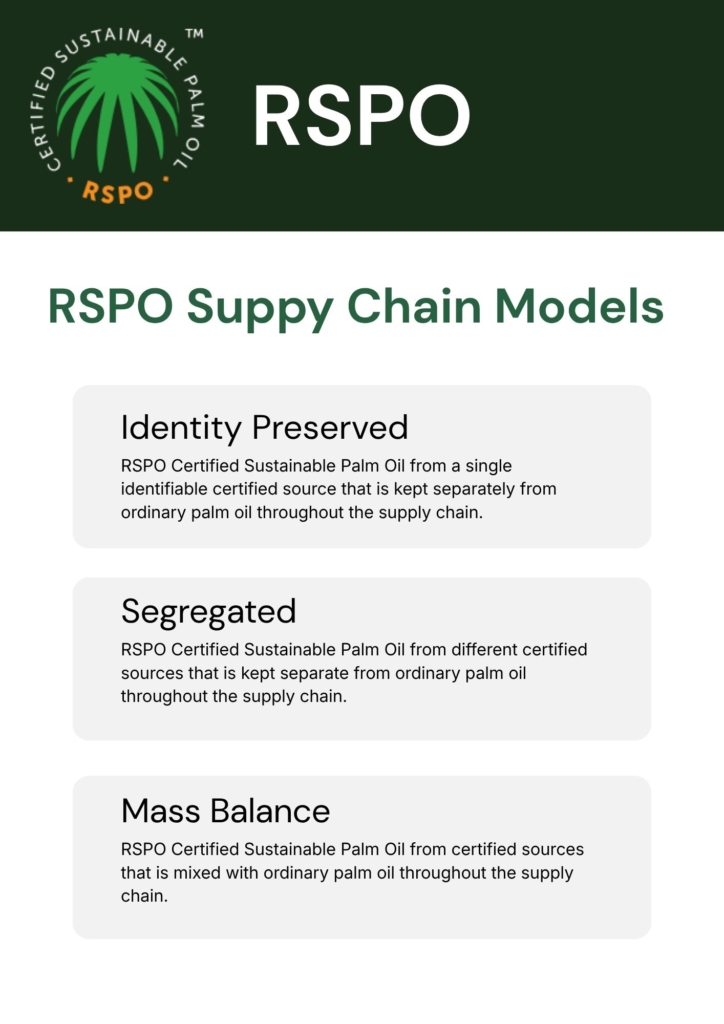
Understanding your supply chain: Only the Identity Preserved (IP) model guarantees 100% farm-to-factory traceability for strict EUDR compliance.
Not all RSPO certifications offer the exact same level of supply chain traceability. To accurately guarantee the origin of your ingredients and prevent greenwashing, B2B manufacturers must understand these fundamental differences:
- Identity Preserved (IP): The absolute highest standard of traceability. The certified product remains completely isolated throughout the entire global manufacturing process.
- Segregated (SG): Ensures 100% certified sustainable palm oil but blends the crop from multiple different certified estates, losing farm-level precision.
- Mass Balance (MB): Supports sustainable production financially but physically mixes certified and non-certified oil during processing.
To achieve absolute transparency and mitigate all regulatory risk, you must demand the RSPO Identity Preserved (IP) model at scale. Understanding how to identify sustainable quality palm oil ensures you never compromise your product’s integrity.
How Do You Evaluate a Palm Oil Supplier’s Traceability?
A sustainability certification is ultimately only as strong as the manufacturing partner holding it. When sourcing high-quality organic palm oil, look for suppliers with a proven, multi-decade track record of industry leadership rather than reactionary compliance.
For example, a partner boasting a 15-year legacy of continuous RSPO certification demonstrates a deeply ingrained corporate commitment to ethical agribusiness. As a global pioneer, DAABON proudly maintains a 100% RSPO-certified landbank and utilizes the rigorous Identity Preserved model.
Furthermore, your supplier must be fully equipped to handle the strict data requirements of modern legislative frameworks. Ensure your partner can readily provide comprehensive geolocation data and end-to-end traceability for every single shipment. This level of granular, farm-level data is now strictly non-negotiable for complying with mandates like the European Union Deforestation Regulation (EUDR).
By partnering with a fully transparent, future-ready producer, you protect your operations from costly regulatory disruptions and build unwavering consumer trust.
4. What Is the Business Case for Sustainable Supply Chains?
How Does Sustainable Sourcing Drive Retail Growth?
The transition to an ethical supply chain is no longer just a corporate social responsibility initiative; it is a direct driver of market growth and profitability. Today’s consumers are highly educated about global supply chain impacts and actively seek out clean-label products.
The Sustainability Premium: According to PwC’s 2024 Voice of the Consumer Survey, modern shoppers are willing to pay an average premium of 9.7% more for goods that are backed by verified sustainable and eco-friendly certifications.
Beyond the end consumer, your retail partners are enforcing much stricter environmental standards. Major retail environments now frequently mandate rigorous sustainability criteria for any new or existing brands they choose to onboard. If your product formulations rely on opaque or conventional ingredients, you risk losing highly valuable shelf space to more progressive competitors. Understanding why brands choose sustainable palm oil is the first step in securing your retail footprint.
How Do Certifications Improve Operational Resilience?
Upgrading to certified sustainable ingredients optimizes your internal operations and drives meaningful global change. Academic research, such as the operational analysis of PT XYZ published in the International Journal of Economic, Business, Accounting, Agriculture Management, demonstrates that implementing rigorous RSPO frameworks actively improves supply chain management and overall efficiency.
| Environmental Metric | The Certified Organic Impact |
|---|---|
| Greenhouse Gas (GHG) Emissions | 42% lower emissions per ton of crude palm oil compared to conventional national averages. |
| Agrochemical Toxicity | 84.6% reduction in toxicity (hazard quotient) by eliminating synthetic pesticides and fertilizers. |
| Global Market Adoption | Over 20% of global production (16.1 million tonnes) is now RSPO-certified, proving enterprise scalability. |
By partnering with a fully integrated supplier like DAABON, B2B manufacturers unlock three distinct operational advantages:
- Regulatory Future-Proofing: Complete farm-to-factory traceability ensures immediate compliance with strict mandates like the EUDR.
- Supply Chain Stability: Vertically integrated operations mitigate the risk of disruption caused by third-party bottlenecks or land disputes.
- Socio-Economic Impact: Prioritizing certified procurement directly protects the planet and empowers the people who cultivate the land, driving sustainable economic development across producing regions.
Ultimately, upgrading your product formulations with high-quality organic palm oil transforms a potential supply chain vulnerability into a distinct competitive advantage, securing retailer trust while proving your brand’s commitment to global fairness.
Conclusion: Future-Proofing Your Supply Chain
Sourcing premium ingredients today requires moving far beyond basic regulatory compliance. True supply chain resilience is achieved by partnering with dedicated producers who champion rigorous, transparent frameworks like Regenerative Organic Certified® (ROC™) Gold, USDA Organic, and RSPO Identity Preserved (IP) models.
Ethical procurement has evolved past being a simple corporate social responsibility checkbox. It is now a fundamental, forward-thinking business strategy.
Key Takeaway: By upgrading your ingredient sourcing, you actively protect fragile global ecosystems, uplift local farming communities, and build unshakeable brand trust with today’s conscious consumers.
You do not have to settle for opaque supply chains or compromised product integrity. Partner with DAABON to secure fully traceable, regenerative, and high-quality organic palm oil for your next industrial formulation.
Explore our Palm Oil Basics or Contact our global team today to discuss your specific sourcing needs and take the definitive step toward a resilient, ethical supply chain.
Frequently Asked Questions (FAQs)
What is the difference between RSPO Mass Balance and Identity Preserved (IP) palm oil?
The primary difference is traceability. The Mass Balance model allows certified oil to be physically mixed with non-certified oil during processing. Conversely, the Identity Preserved (IP) model ensures the oil is kept strictly isolated throughout the entire supply chain, allowing it to be traced back to a single, specific certified mill. For B2B manufacturers, IP is the gold standard for deforestation-free verification.
Does organic palm oil perform the same as conventional palm oil in food manufacturing?
Yes. Sourcing high-quality organic palm oil does not compromise functional stability. Empirical research confirms that sustainably produced palm oil maintains critical properties like high smoke points, oxidative stability, and precise crystallization behaviors required for industrial baking and complex food matrices.
How does Regenerative Organic Certified® (ROC™) Gold differ from USDA Organic?
While USDA Organic bans synthetic inputs, ROC™ Gold goes further by requiring practices that actively restore the environment. ROC™ Gold focuses on rehabilitating soil health, sequestering atmospheric carbon, and ensuring social fairness for workers. It shifts the agricultural focus from “doing no harm” to actively healing the ecosystem.
How does sourcing certified palm oil help with EUDR compliance?
Sourcing RSPO Identity Preserved (IP) oil provides the precise, farm-level geolocation data required for EUDR compliance. Because the EU Deforestation Regulation mandates proof that products are not linked to recent deforestation, working with a legacy producer like DAABON ensures you have the verifiable data needed to meet rigorous modern legislative frameworks.